


Jeonse 전세
One very large deposit, no monthly rent. The full deposit comes back when you move out.
Jeonse and wolse, the lease checks that protect your deposit, and the paperwork for your first 90 days. Written for people still packing.
Tap the lock on the door, enter any four numbers, then press *
Set the cash you can put down and the rent you can pay. The map lights up every Seoul district where new leases fit.
Fits your budgetOnly at the cheaper endOver budget
Each district shows the median of new leases signed from May 2026 to Oct 2026.
Korean leases trade a deposit against monthly rent. The bigger the deposit you hand over, the less you pay each month. Every lease you see sits somewhere on this line.
One very large deposit, no monthly rent. The full deposit comes back when you move out.
A large deposit and a smaller monthly rent. Common when owners want some monthly income.
A modest deposit and full monthly rent. What most newcomers sign first.
When a landlord swaps part of your deposit for monthly rent, the yearly rent added may not exceed the lower of 10% or the Bank of Korea base rate plus 2 points. Today that cap is 5.0% a year.
Sources: Housing Lease Protection Act, art. 7-2, and its Enforcement Decree, art. 9 (10% a year, or base rate + 2% a year, whichever is lower). Bank of Korea base rate 3.00% since 27 Aug 2026, held on 22 Oct 2026. Checked 17 Nov 2026; the next rate decision is 26 Nov 2026.
Four dates run the paperwork side of moving in. Miss them and fines follow. Keep them and your deposit, bank account and health cover fall into place.
Hotels, guest houses and serviced residences while you view flats. Stays in Korea covers them.
Once registered, report each new address within 15 days at the community centre or immigration office. For a registered foreigner this report also counts as the move-in report that protects a lease.
Staying longer than 90 days means registering with immigration within 90 days of entry. Book the visit on HiKorea first; slots fill up weeks ahead.
After six months in Korea you are enrolled automatically unless your employer already covers you. Students and marriage migrants are enrolled once they register.
Sources: Immigration Act, art. 31 (registration within 90 days of entry) and art. 36 (address change within 15 days); National Health Insurance Service, mandatory enrolment for foreign residents after six months (since 16 Jul 2019). Checked 17 Nov 2026.
Each comes with its own lease, its own deposit habits and its own people next door.


A single room with a kitchen line and bathroom. Usually rented on wolse. The default first home for students and single workers.
An empty room ready for a tenant. Photo: 최광모, CC0
Commute, school and budget decide the neighbourhood. We start where most newcomers sign their first lease.
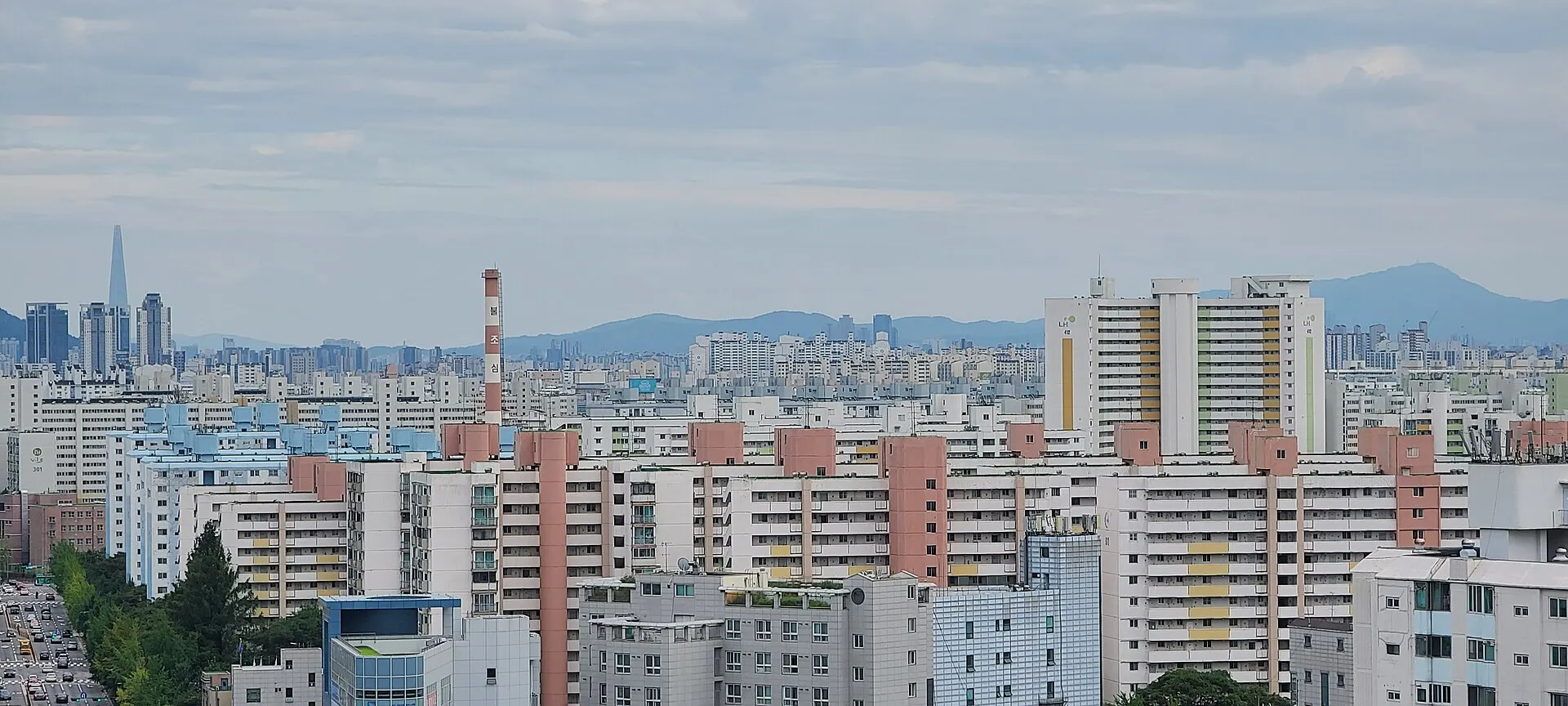
Panorama: Nowon-gu, Seoul. Photo: Ox1997cow, CC BY-SA 3.0, via Wikimedia Commons.